



Japan leads the world in the number of companies with SBTi‑approved targets — yet fewer than 5% have committed to net zero, revealing a structural gap between near‑term emissions cuts and long‑term decarbonization ambition. Within this gap, one sector stands out: Real Estate. Japan’s property developers already have a credible technology pathway — from ZEB/ZEH and advanced insulation to heat pumps, hydrogen fuel cell systems, and next‑generation solar such as perovskite — enabling earlier NZ commitments. Their progress underscores a broader truth: sectors with clear, affordable decarbonization technologies move first, while others remain stalled despite SBTi certification.
Background: SBTi in Numbers
The Science Based Targets initiative (SBTi) provides a globally recognized framework for companies to set emissions reduction targets aligned with climate science. As of April 4, 2026, 10,589 companies worldwide have set SBTi-approved targets — a figure that reflects the broad corporate uptake of near-term climate commitments.3
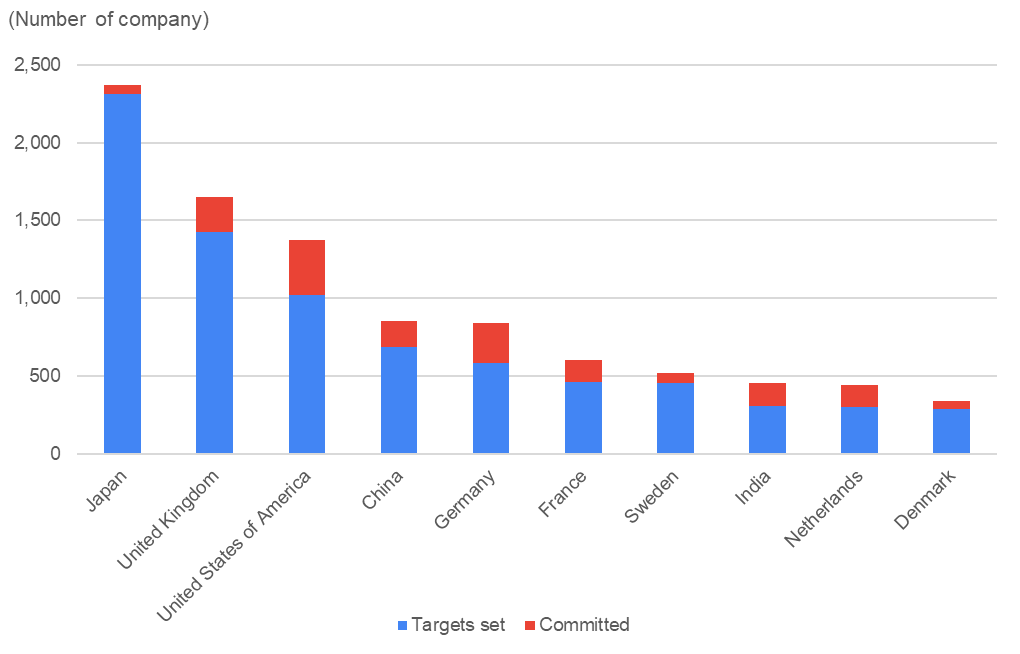
Japan tops this ranking with 2,301 certified companies, more than any other country. The United Kingdom follows with 1,423, the United States with 1,023, and China with 685. Japan’s high absolute count partly reflects the sheer number of Japanese companies — including small and medium-sized enterprises — that have engaged with voluntary climate frameworks, driven by the Tokyo Stock Exchange’s governance reform agenda and growing investor pressure on ESG disclosure. Japan’s mandatory adoption of ISSB-aligned climate disclosure standards, scheduled to take effect from fiscal year 2027 for the largest listed companies, is likely to sustain this momentum as transparency requirements intensify.4
SBTi Certified Companies and Net-Zero (NZ) Commitments by Country (as of April 4, 2026)
Source: SBTi company database, April 4, 2026.
The Net-Zero Gap: Japan vs. Peers
The headline numbers conceal a striking divergence. Of Japan’s 2,301 SBTi-certified companies, only 101 — just 4% — have set a net-zero (NZ) target. In the UK, that figure is 43%, representing 608 companies. In the US, despite an adverse political environment for climate commitments under the current administration, 265 companies (26%) have committed to NZ. Even China, with a smaller certified base, shows a 15% NZ rate with 103 companies.
The gap between Japan’s near-term emissions reductions and long-term net-zero commitments points to a structural feature of Japanese corporate climate strategy: broad adoption of SBTi certification as a first step, but a more cautious approach to committing to the harder, longer-horizon target of full decarbonisation. This caution may also reflect a harder underlying reality — that for many industrial sectors, the technologies needed to eliminate residual emissions entirely do not yet exist at commercial scale or viable cost.
This is not necessarily a failure — SBTi’s NZ standard is more demanding and requires a credible pathway to eliminate residual emissions, typically by 2050. The data suggests Japanese companies have been willing to set near-term science-based targets but have not yet translated that commitment into long-term NZ pledges at the rate seen in the UK or US. Geographic constraints compound the challenge: Japan’s renewable energy penetration remains comparatively low, and electricity prices for corporates are materially higher than in many Western markets, making the cost of electrification-based decarbonization a genuine structural barrier rather than a matter of ambition alone.
Sectoral Differences in Net‑Zero Adoption
Source: SBTi company database, April 4, 2026.
Sector Breakdown: Where Japan Leads — and Where It Lags
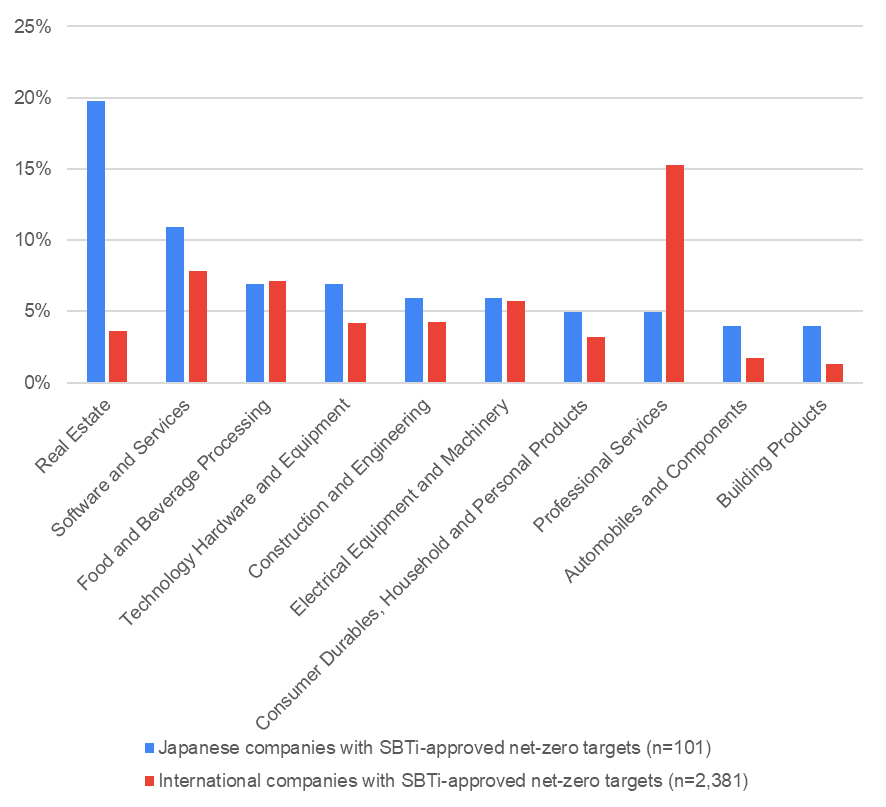
Among Japan’s 101 NZ-committed companies, certain sectors stand out. Real Estate companies show a disproportionately high representation relative to global peers. Software, Technology Hardware, and Construction sectors also feature prominently. This contrasts with the global pattern, where Professional Services companies have the highest propensity to set NZ targets.
Japan’s relative strength in Real Estate NZ commitments reflects the sector’s tangible exposure to energy efficiency and building decarbonization. The Japanese real estate industry has made notable progress across multiple technology vectors:
- ZEB (Zero Energy Buildings) and ZEH (Zero Energy Houses): mandatory and incentivized standards driving near-zero energy consumption in new construction.
- Hydrogen and fuel cells: deployed in commercial and residential buildings as backup and primary energy systems.
- Solar (conventional and perovskite): integrated into building envelopes, facades, and rooftops where conventional panels cannot reach.
- Advanced insulation, heat pumps, and building management systems completing the efficiency stack.
This technology depth gives Japanese real estate companies a credible technology and pathway to net zero that peers in many markets lack — and may explain why this sector has moved faster on NZ commitments than the headline 4% rate suggests.
Nikkei 225: NZ Commitments Among Japan’s Largest Companies
Of the 225 companies in the Nikkei 225 index, 41 have set SBTi-approved net‑zero targets — an 18% rate that far exceeds Japan’s overall 4%, reflecting the greater resources, international investor scrutiny, and reputational incentives facing large‑cap firms. Within the Real Estate sector, two constituents — Mitsubishi Estate (8802 JP) and Tokyu Fudosan Holdings (3289 JP) — have already committed to net zero, highlighting the sector’s relatively advanced decarbonisation readiness compared with the broader market.
Mitsubishi Estate (8802), Japan’s largest property developer by market capitalization, has embedded net-zero commitments across its development pipeline, with ZEB standards now applied to new office projects and a growing portfolio of low-carbon residential developments.1
Tokyu Fudosan Holdings (3289) has similarly advanced decarbonization across its commercial, residential, and resort properties, with renewable energy procurement and building efficiency upgrades as core pillars of its NZ roadmap.2
The concentration of NZ commitments in Real Estate — a sector with tangible, measurable energy use — reinforces the view that Japan’s NZ progress is most advanced where the technology pathway is clearest and the regulatory environment most supportive.
Conclusion: A Credible Pathway Exists — But the Gap Must Narrow
A growing number of companies setting SBTi‑approved net‑zero targets implies a reasonable corporate expectation that the technologies required to achieve net‑zero emissions will be available within the target timeframe. They also anticipate that capital investment in such technologies will allow them to capture future market growth opportunities. Japan’s real estate sector has already demonstrated that, where the technology pathway is clear and policy incentives are aligned, companies can and do commit to net zero.
The question is whether that model can be replicated across manufacturing, utilities, chemicals, steel, and transportation — sectors that account for the majority of industrial emissions but lack an equally well‑defined decarbonization roadmap. Closing the gap between near‑term ambition and long‑term commitment will require both stronger investor engagement and continued technology development to make net zero a credible prospect rather than an aspirational one.
Japanese translations
Title: ターゲットからテクノロジーへ:不動産セクターはいかにしてネットゼロへの実行可能な道筋を見出したのか
日本は SBTi 認定企業数で世界をリードしているにもかかわらず、ネットゼロ(NZ)目標を掲げている企業は 5% 未満にとどまる。英国や米国との比較は、近期的な排出削減と長期的な脱炭素化の野心のあいだに存在する構造的なギャップを浮き彫りにする。しかし、このギャップの中で際立つセクターがある──不動産だ。他の多くの産業とは異なり、日本の不動産デベロッパーは ZEB・ZEH、先進断熱材、ヒートポンプ、水素システム、ペロブスカイト太陽電池など、ネットゼロに至るための実行可能な技術的道筋をすでに持っている。この早期の NZ コミットメントは、より広い真実を示している。すなわち、明確で手頃な脱炭素技術を持つセクターから先に動き、そうでないセクターは SBTi 認定を受けていても停滞するということだ。
背景:SBTi の現状
Science Based Targets initiative(SBTi)は、企業が気候科学と整合した排出削減目標を設定するための国際的な枠組みである。2026年4月4日時点で、世界では 10,589 社が SBTi 承認済みの目標を設定しており、これは近期的な気候コミットメントが広く普及していることを示している。
国別では、日本が 2,301 社でトップ、英国が 1,423 社、米国が 1,023 社、中国が 685 社と続く。日本の高い数値は、東証のガバナンス改革や ESG 開示への投資家圧力を背景に、中小企業を含む幅広い企業が自主的な気候枠組みに参加していることを反映している。また、日本では 2027 年度から大企業に対して ISSB に整合した気候開示が義務化される予定であり、透明性要件の強化がこの流れをさらに後押しするとみられる。
SBTi Certified Companies and Net-Zero (NZ) Commitments by Country (as of April 4, 2026)
Source: SBTi company database, April 4, 2026.
ネットゼロ・ギャップ:日本 vs. 他国
日本の 2,301 社のうち、NZ 目標を設定しているのはわずか 101 社(4%)。英国は 43%、米国は 26%、中国は 15% と、いずれも日本を大きく上回る。
このギャップは、日本企業の気候戦略の構造的特徴を示している。多くの企業が SBTi 認定を第一歩として採用している一方で、より難易度の高い長期目標である NZ へのコミットメントには慎重だ。これは単なる姿勢の問題ではなく、多くの産業で残余排出を完全に除去するための技術が、商業規模やコスト面でまだ確立されていないという現実も反映している。
さらに、日本は再エネ比率が低く、企業向け電力価格も欧米より高いため、電化ベースの脱炭素化が構造的に難しいという地理的制約も存在する。
Sectoral Differences in Net‑Zero Adoption
Source: SBTi company database, April 4, 2026.
セクター別分析:日本が進む分野、遅れる分野
日本の NZ 目標設定企業 101 社の中で、特に存在感が大きいのが不動産セクターである。ソフトウェア、テクノロジーハードウェア、建設も比較的多い。一方、世界全体では Professional Services が最も高い NZ 設定率を示しており、日本とは対照的だ。
不動産セクターが先行する理由は、建物のエネルギー効率や脱炭素化が技術的に明確で、実装可能な手段が揃っているためである。具体的には:
- ZEB / ZEH:新築における省エネ基準の義務化・インセンティブ
- 水素・燃料電池:商業・住宅でのバックアップ電源や一次エネルギーとして活用
- 太陽光(従来型+ペロブスカイト):外壁・屋根・ファサードへの統合
- 先進断熱材・ヒートポンプ・BEMS:効率化のフルスタック
これらの技術的深みが、日本の不動産企業に他国の同業他社にはない「ネットゼロへの実行可能な道筋」を与えている。
日経225:大企業における NZ コミットメント
日経225構成企業 225 社のうち、41 社が SBTi NZ 目標を設定しており、これは日本全体の 4% を大きく上回る 18% に相当する。大企業は資源が豊富で、国際投資家からの監視や評判リスクも大きいため、NZ コミットメントが進みやすい。
不動産セクターでは以下の 2 社が NZ を設定している:
- 三菱地所(8802 JP)
- 東急不動産ホールディングス(3289 JP)
三菱地所は新規オフィス開発に ZEB 基準を適用し、低炭素住宅の開発も拡大している。東急不動産HDも再エネ調達や省エネ改修を柱に NZ ロードマップを進めている。
不動産セクターに NZ コミットメントが集中していることは、技術的道筋が明確で、規制環境も整っている分野では日本企業が確実に前進できることを示している。
結論:道筋はある──しかしギャップを縮める必要がある
SBTi 承認済みの NZ 目標を掲げる企業が増えていることは、企業が「必要な技術が目標年限までに利用可能になる」と合理的に期待していることを示している。また、こうした技術への設備投資が将来の市場成長機会をもたらすとの見通しもある。
日本の不動産セクターは、技術的道筋が明確で政策インセンティブが整えば、企業はネットゼロにコミットできることをすでに証明した。今後の課題は、このモデルを製造業、化学、鉄鋼、輸送といった主要排出セクターに広げられるかどうかだ。
近期的な野心と長期的なコミットメントのギャップを埋めるには、 投資家エンゲージメントの強化と 脱炭素技術のさらなる開発 が不可欠である。ネットゼロを「 aspirational(願望)」ではなく「credible(実現可能)」なものにするために。
Disclaimer: This article is for informational purposes only and does not constitute investment advice or a recommendation to buy or sell any security.
References
1 Mitsubishi Estate Co., Ltd., “Sustainability Report 2025,” Mitsubishi Estate Group, 2025. See also: Mitsubishi Estate, “ZEB Promotion Policy,” IR/ESG Disclosure, 2024.
2 Tokyu Fudosan Holdings Corporation, “Integrated Report 2025 / ESG Data,” Tokyu Fudosan Holdings Group, 2025.
3 Science Based Targets initiative (SBTi), “Companies Taking Action,” SBTi Company Database, accessed April 4, 2026. Available at: https://sciencebasedtargets.org/companies-taking-action
4 Financial Services Agency (FSA) of Japan, “Policy on Mandatory ISSB-Aligned Climate Disclosure for Prime Market Listed Companies,” FSA, 2024. Tokyo Stock Exchange, “Corporate Governance Code,” revised 2021.