


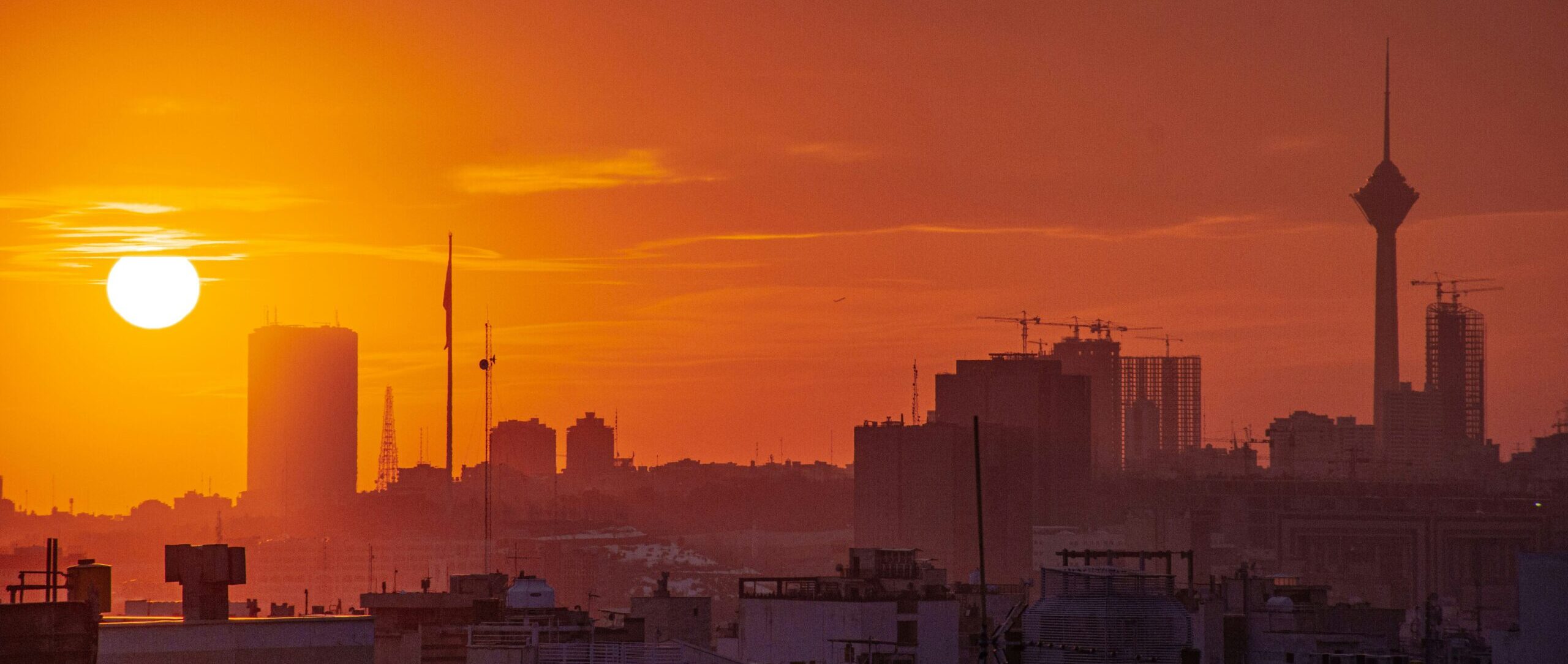
Photo by Hosein Charbaghi on Unsplash
Escalating military signals—from U.S. threats against Iran’s power‑generation systems to Tehran’s missile launches toward Diego Garcia—have deepened uncertainty, leaving diplomacy as the only remaining barrier to a broader conflict.
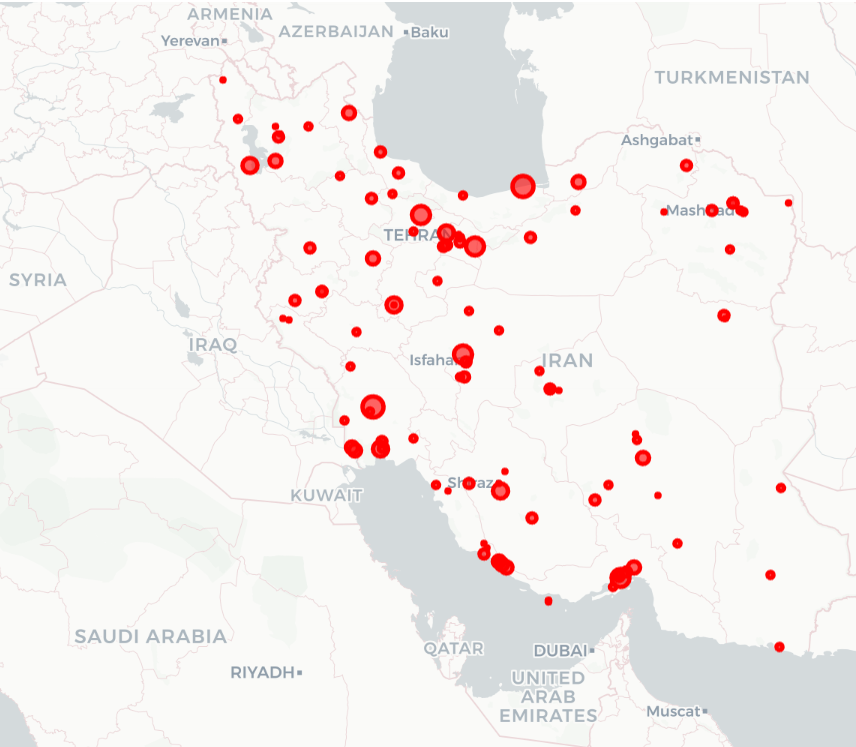
Notes: Data from Climate Trace as of March 22nd, 2026. Red circles indicate the locations of power generation facilities in Iran. The size of each red circle represents the amount of emissions produced by the facilities in 2025.
As military signaling intensifies, regional and global actors scramble to prevent the crisis from crossing a dangerous threshold
Tensions around the Strait of Hormuz have risen sharply following a U.S. warning on March 22 that Iran must reopen the strait or face strikes on its power‑generation facilities. With more than one hundred power plants—including major facilities near Tehran and several located close to the strait—such an operation would mark a significant escalation in military pressure and carry substantial economic consequences. The threat signals a clear intent by the United States to force a rapid shift in Iranian behavior while indicating that critical infrastructure is no longer considered off‑limits.
Iran’s response has been equally forceful. Tehran reportedly launched two ballistic missiles toward Diego Garcia, which hosts U.S. and U.K. military facilities, with an assessed range of up to 4,000 kilometers. One missile malfunctioned and fell during flight, while the other prompted a U.S. interceptor launch. Israeli research institutes cited by the Wall Street Journal have generally estimated Iran’s maximum range at around 3,000 kilometers, though some reports point to work on longer‑range systems. The incident has heightened concerns about undisclosed capabilities and added new uncertainty to an already volatile confrontation.
Despite the severity of the rhetoric and the continued exchange of threats, diplomatic channels remain open. Neither the United States nor Tehran appears to seek a full‑scale war, and regional actors—including Gulf states and European governments—are now deeply invested in preventing further escalation. Japan’s efforts to secure the release of detained citizens add another layer of diplomatic engagement. Whether these overlapping pressures can guide both sides toward de‑escalation will determine whether the crisis stabilizes or moves into a more dangerous phase.
Geographical Range from Tehran (2,000 km / 4,000 km)
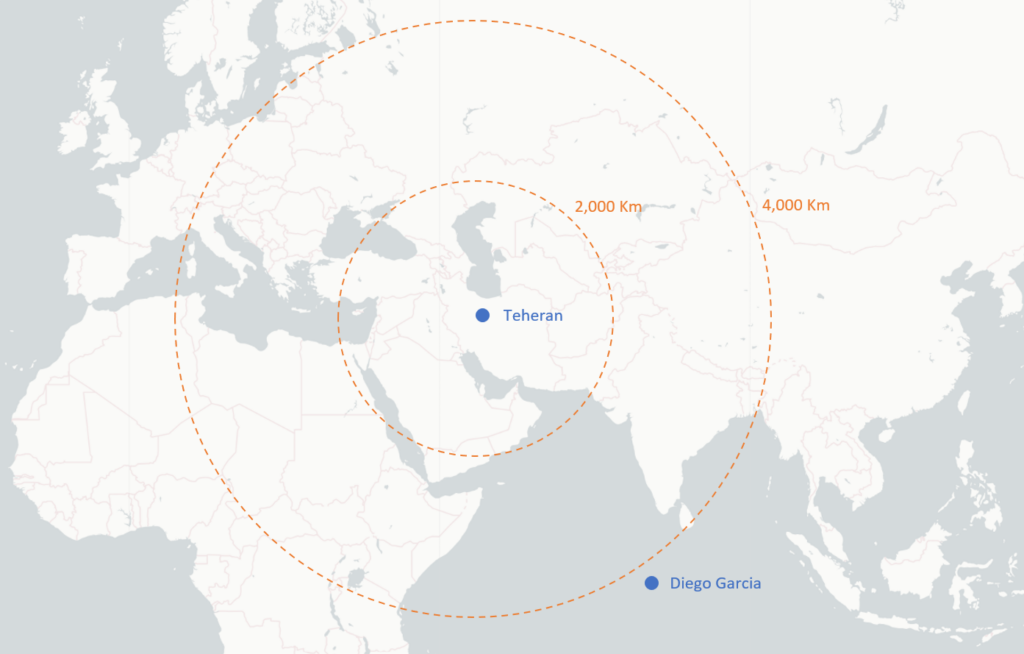
Notes: Prepared based on information from the Nikkei Shimbun (March 23, 2026). Distances are measured from Tehran. Due to map distortion, the figures are approximate and not strictly accurate.
Japanese translations: 高まる緊張と拡大阻止のための争い
ホルムズ海峡周辺の緊張は、米国が3月22日にイランへ海峡の再開を要求し、応じなければ発電施設への攻撃も辞さないと警告したことで急速に高まった。イラン国内には100を超える発電所があり、テヘラン近郊の主要施設や海峡近くの拠点も含まれるため、こうした作戦は軍事的圧力の大幅な強化となり、経済的影響も甚大となる。米国はイランの行動を迅速に転換させる意図を明確にし、重要インフラがもはや“不可侵”ではないことを示した形だ。
イランも強硬姿勢を崩していない。テヘランはディエゴガルシア(米英軍基地が所在)に向けて弾道ミサイル2発を発射したとされ、射程は最大4,000キロに達すると評価されている。1発は飛行中に故障して落下し、もう1発は米軍が迎撃ミサイルを発射する事態となった。ウォール・ストリート・ジャーナルが引用したイスラエルの研究機関は、これまでイランの最大射程を約3,000キロと見積もってきたが、より長距離のシステムを開発しているとの報告もある。今回の発射は、未公表の能力に対する懸念を一段と高め、すでに不安定な対立に新たな不確実性を加えた。
激しい応酬が続く一方で、外交チャンネルは依然として開かれている。米国もイランも全面戦争を望んでいるようには見えず、湾岸諸国や欧州各国など地域・国際の関係国は、さらなるエスカレーションを防ぐために深く関与している。日本も拘束された自国民の解放に向けて動いており、外交的取り組みの層を厚くしている。こうした複数の圧力が両国をデエスカレーションへ導けるかどうかが、危機が安定に向かうのか、より危険な段階へ進むのかを左右することになる。