


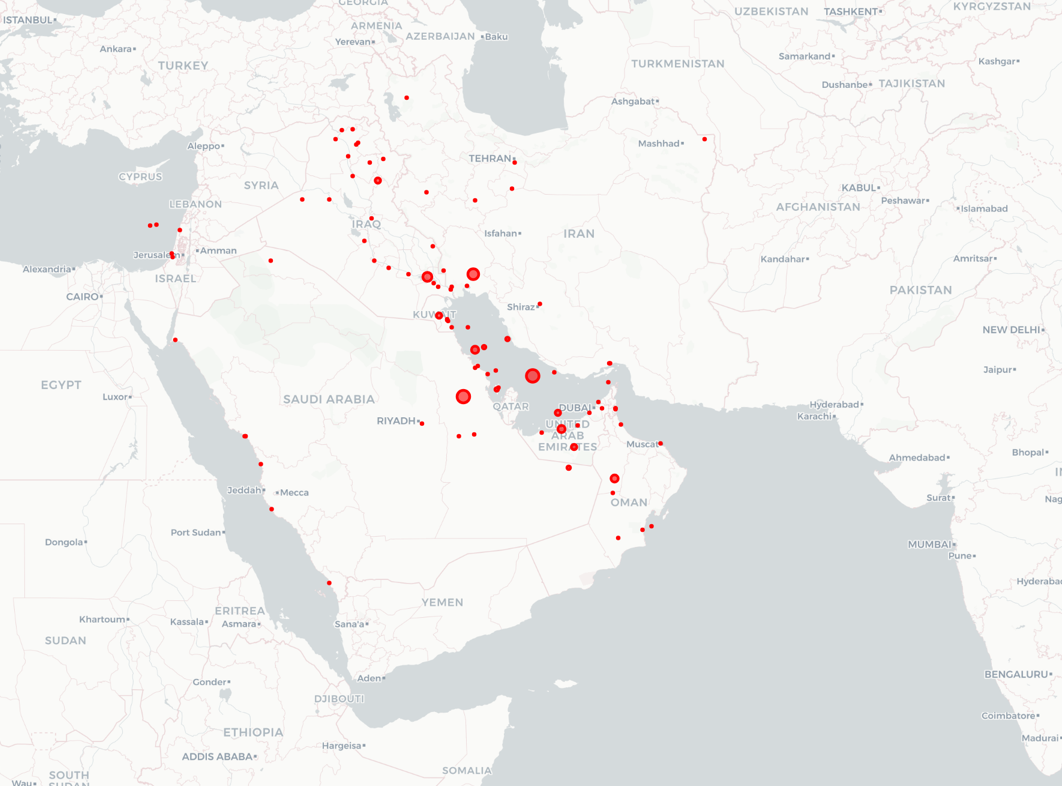
Amid rising tensions among the U.S., Israel, and Iran, Iranian attacks on Gulf energy infrastructure, the effective closure of the Strait of Hormuz, and fledgling back‑channel diplomacy have pushed WTI toward 100 dollars and left the market highly sensitive to further military, maritime, and geopolitical developments.
Exhibit: Geopolitical Risks and Energy Infrastructure Disruptions Across the Middle East
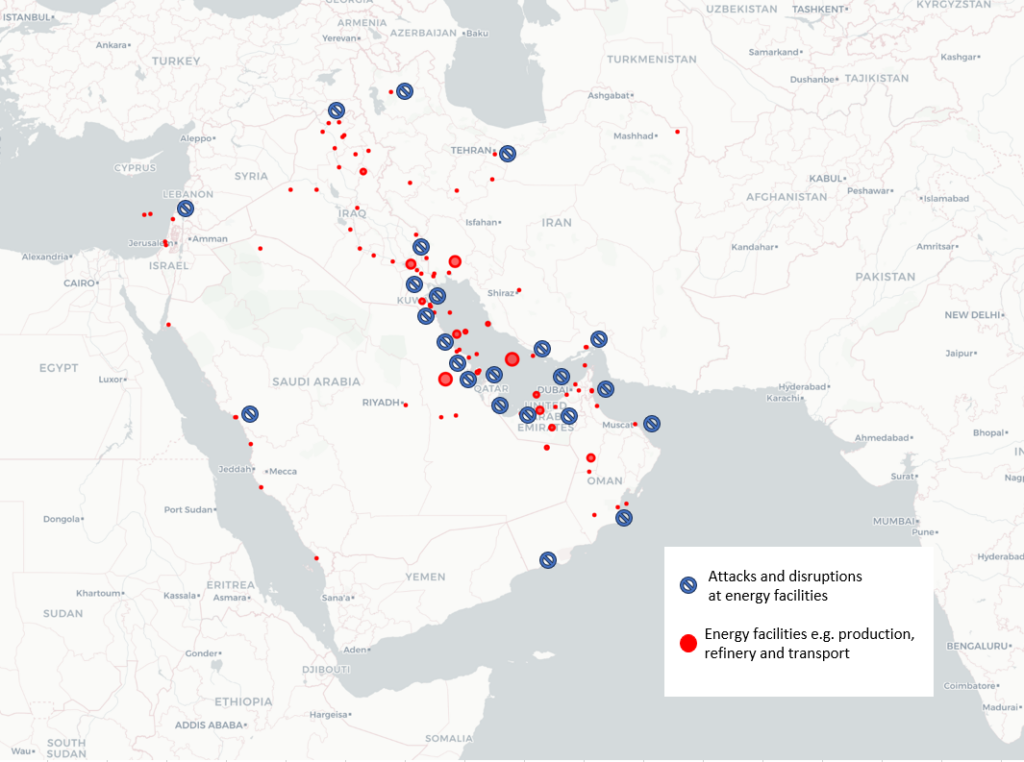
Notes: Red circles indicate energy facilities across the Middle East—including production, refinery, and transport sites—with circle size reflecting the estimated 2025 CO₂e emissions based on Climate Trace data. Blue circles mark facilities that have come under attack, using information compiled from New York Times reporting published on March 21.
Supply disruptions and geopolitical escalation push WTI toward 100 dollars and amplify market sensitivity to further shocks
Geopolitical tensions across the Middle East have remained elevated, with more than three weeks having passed since the joint U.S.–Israeli military action against Iran on February 28. In retaliation, Iran has carried out attacks on energy facilities throughout the Gulf region, targeting production, refining, and transport infrastructure in countries such as Saudi Arabia, the UAE, and Iraq. The map reflects the geographic spread of these incidents and underscores the structural vulnerability of the region’s energy network to asymmetric disruptions. Compounding these risks, the Strait of Hormuz has become effectively impassable for normal commercial traffic, as tankers and cargo vessels can no longer transit safely.
Market reactions have been volatile. On March 22, WTI crude futures climbed to 98 dollars, approaching the psychologically significant 100‑dollar threshold again as traders priced in heightened supply risks. The combination of a de facto shutdown of the world’s most critical oil chokepoint, repeated strikes on Gulf energy infrastructure, and uncertainty over regional escalation has pushed risk premiums sharply higher. At the same time, the United States and Iran are reportedly exploring indirect communication channels through third countries such as Egypt, suggesting that both sides may be seeking to prevent a broader escalation despite the deteriorating security environment.
Looking ahead, the trajectory of WTI will depend on the interplay between continued military activity, the status of maritime routes, and any diplomatic progress. A prolonged disruption of the Strait of Hormuz or further attacks on Gulf energy assets could propel prices into the 100–120‑dollar range. A more controlled but still tense environment, with limited shipping access and sporadic attacks, would likely keep WTI elevated around 90–105 dollars. Conversely, if indirect negotiations gain traction and maritime risks begin to ease, the risk premium could shrink, allowing prices to retreat toward the high‑80s. For now, the market remains highly sensitive to even marginal shifts in the regional security landscape.
Japanese translations
Title: 中東の紛争がエネルギー安全保障と市場動向を再形成する
図表:中東における地政学リスクとエネルギーインフラの混乱
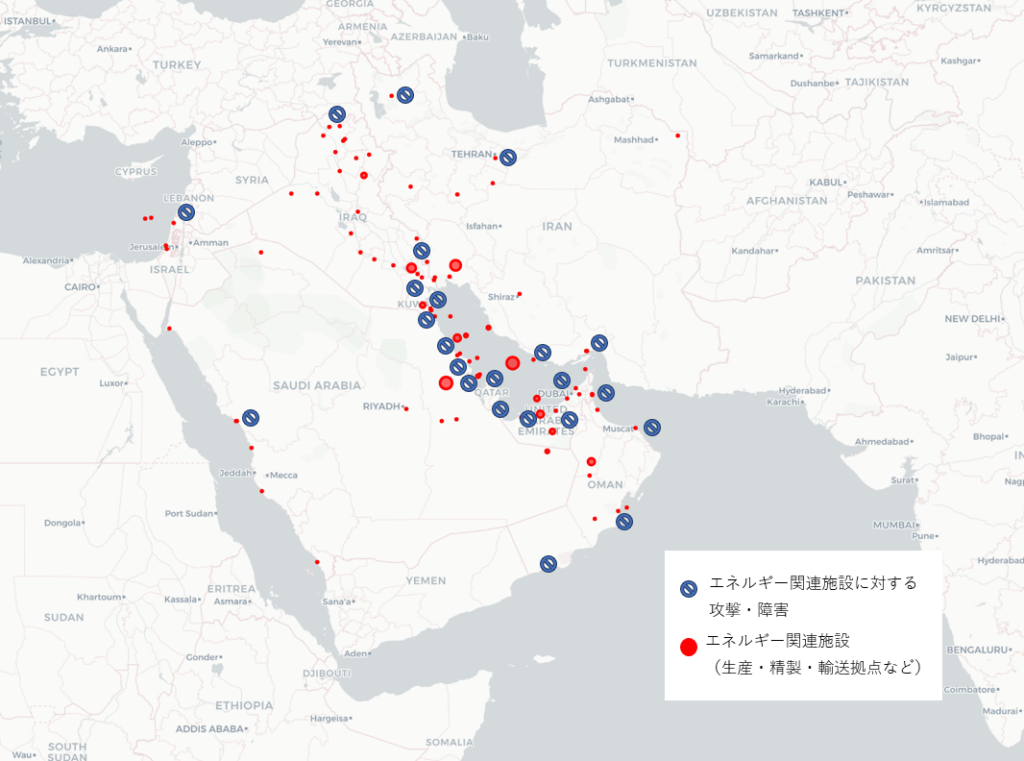
Notes: 中東全域のエネルギー関連施設(生産・精製・輸送拠点など)を赤丸で示し、その大きさは Climate Trace のデータに基づく推計 2025 年 CO₂e 排出量を反映しています。青丸は攻撃を受けた施設を示しており、3 月 21 日付の New York Times 報道をもとに作成しています。
2月28日の米・イスラエルによる対イラン共同軍事行動から3週間以上が経過し、中東全域では地政学的緊張が一段と高まっている。報復として、イランは湾岸地域のエネルギー施設に対する攻撃を実施し、サウジアラビア、UAE、イラクなどにおける生産・精製・輸送インフラを標的としている。本マップは、こうした攻撃が地理的に広範囲に及んでいることを示すとともに、非対称的な攪乱に対する同地域のエネルギーネットワークの構造的脆弱性を浮き彫りにしている。さらに、世界で最も重要な石油チョークポイントであるホルムズ海峡が事実上通行不能となり、タンカーや貨物船が安全に航行できない状況が続いている。
市場の反応は極めて不安定だ。3月22日にはWTI原油先物が98ドルまで上昇し、供給リスクの高まりを織り込む中で心理的節目である100ドルに再び接近した。世界で最も重要な石油輸送ルートの封鎖、湾岸エネルギーインフラへの相次ぐ攻撃、そして地域的エスカレーションに対する不透明感が重なり、リスクプレミアムは急上昇している。一方で、米国とイランはエジプトなど第三国を通じた間接的なコミュニケーション・チャネルを模索しているとされ、悪化する治安環境にもかかわらず、双方がさらなるエスカレーション回避を探っている可能性が示唆される。
先行きを見ると、WTIの動向は軍事活動の継続状況、海上輸送ルートの状態、そして外交的進展の有無が複雑に絡み合う形で決まっていく。ホルムズ海峡の長期的な混乱や湾岸エネルギー資産への追加攻撃が続けば、価格は100〜120ドルのレンジに向かう可能性がある。限定的な航行アクセスと散発的な攻撃が続く「一定の管理下にあるものの、緊張が残る環境」では、WTIは90〜105ドル程度の高止まりが見込まれる。逆に、間接協議が進展し、海上リスクが緩和に向かえば、リスクプレミアムは縮小し、価格は80ドル台後半へと後退する余地がある。現時点では、地域の安全保障環境におけるわずかな変化であっても、市場は極めて敏感に反応する状況が続いている。