


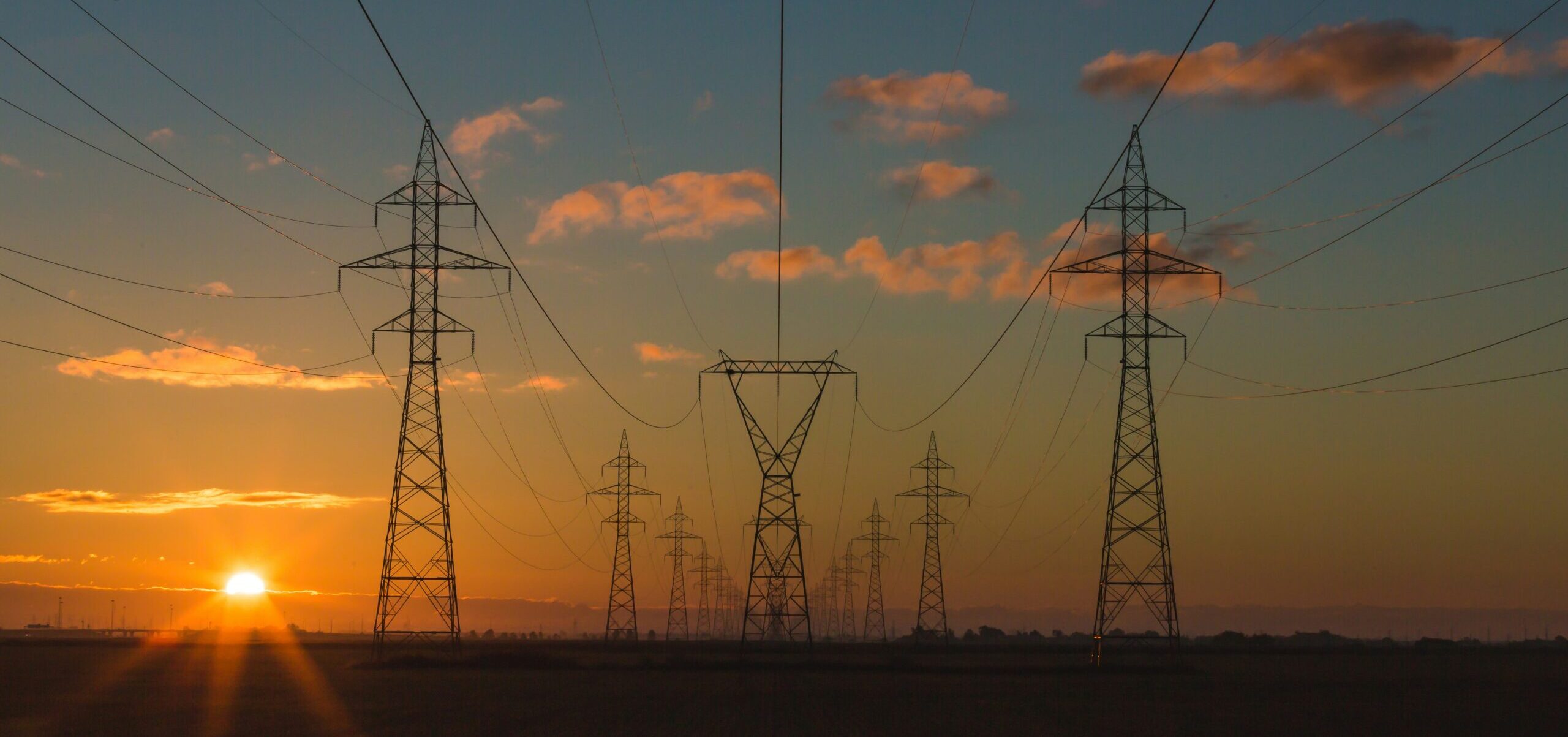
Photo by Matthew Henry on Unsplash
Grid-scale battery storage in Japan sits at the intersection of three durable structural forces — regulatory liberalization, semiconductor-driven power demand, and renewable energy integration — each self-reinforcing, none transient.[1] Kyushu’s Kumamoto corridor has demonstrated that the commercial model is executable at scale today; the policy architecture now in place ensures that replication, not exception, is the trajectory.
Japan’s December 2022 amendment to the Electricity Business Act formally deregulated the direct connection of large-scale battery systems to the national transmission grid, enabling operators to charge during periods of low wholesale electricity prices and discharge — or sell back — when prices are elevated.[1] This so-called grid-scale battery storage (keitō-yō chikudenchi) model had existed in conceptual form for years, but regulatory ambiguity had long blocked commercial deployment at scale; the 2022 reform removed that barrier in a single legislative stroke, effectively creating a new asset class in Japan’s power sector.[1] The timing was not accidental: the reform followed a series of near-blackout events across western Japan in 2021 and 2022 driven by surplus solar generation overwhelming grid capacity during low-demand periods — a problem that large-scale storage is architecturally designed to solve.[2]
The Kyushu Proof-of-Concept
The immediate beneficiary of the 2022 reform was Kyushu, and specifically the Kumamoto corridor, where TSMC’s Japanese subsidiary JASM brought with it an insatiable, zero-tolerance-for-outage appetite for electricity.[1] Semiconductor fabrication plants are among the most electrically intensive industrial facilities in existence — a leading-edge fab can consume as much power as a mid-sized city — and cannot tolerate even a sub-second grid interruption without risking the destruction of in-process wafers worth hundreds of millions of yen.[1] This acute need has made the triptych of semiconductors × renewable energy × battery storage not merely complementary but operationally inseparable in Kyushu’s energy planning: solar and wind provide low-cost electrons during peak generation hours, batteries absorb the surplus and smooth volatility, and the semiconductor fabs draw from a stabilized local grid buffer rather than raw transmission-line exposure.[1]
National Propagation — Two Vectors
The Kumamoto proof-of-concept is now propagating nationally along two distinct vectors.[1] The first is semiconductor-led: Hokkaido has emerged as Japan’s second major semiconductor frontier, anchored by Rapidus — the government-backed consortium targeting sub-2nm logic chip production — which requires the identical energy infrastructure stack (high-density renewables, co-located storage, transmission redundancy) that was assembled around JASM in Kumamoto.[1] If the Kumamoto keyword surge in Shikiho disclosures is any precedent, a comparable wave of Hokkaido-linked guidance revisions should be expected across the 2026–2027 reporting cycle as Rapidus’s construction schedule matures into operational readiness.[1] The second vector is data-center-led: the explosive growth of hyperscale and edge compute facilities across the Kanto and Kansai metropolitan corridors is generating demand profiles that are structurally analogous to semiconductor fabs — large, continuous, outage-intolerant loads that benefit from co-located storage buffers to hedge wholesale price spikes and to qualify for grid-balancing ancillary service revenues under Japan’s new capacity market framework.[2]
Conclusions
The underappreciated analytical point is that this is not principally a renewable energy story, nor a semiconductor story. It is a grid infrastructure story — and grid infrastructure, once built, generates the kind of long-duration, regulated or quasi-regulated cash flows that tend to be systematically mispriced by equity markets that default to sector-classification frameworks designed for an earlier energy paradigm.[2]
For investors, the actionable framework is twofold: apply particular scrutiny to companies with layered revenue structures combining anchor-tenant offtake and merchant grid services; and calibrate national exposure across Kyushu, Hokkaido, and the major data-center corridors as three distinct but structurally related deployment waves, each at a different stage of the commercialization curve.[1]
Japanese translations
「系統用蓄電池:日本で立ち上がる新たなエネルギービジネス」
日本のグリッドスケール蓄電池市場は、規制自由化・半導体産業による電力需要・再エネ統合という三つの持続的な構造要因の交点に位置している。これらは互いに補強し合う関係にあり、いずれも一過性ではない[1]。九州・熊本コリドーは、この商業モデルがすでに実行可能な規模で成立していることを示し、現在整備されている政策アーキテクチャは、例外ではなく「全国的な再現」を前提とした軌道を形成している。
2022年12月の電気事業法改正により、日本では大規模蓄電池の送電網への直接接続が正式に自由化された。これにより、事業者は卸電力価格が低い時間帯に充電し、価格が高い時間帯に放電(売電)することが可能になった[1]。この「系統用蓄電池(keitō-yō chikudenchi)」モデルは長年概念として存在していたが、規制の曖昧さが商業規模での展開を阻んでいた。2022年の改正はその障壁を一挙に取り除き、日本の電力セクターに新たなアセットクラスを創出した[1]。このタイミングは偶然ではない。2021〜2022年に西日本で相次いだ「太陽光余剰による系統逼迫・ブラックアウト寸前」の事象が背景にあり、これこそが大規模蓄電池が構造的に解決する問題だった[2]。
九州の実証(Proof-of-Concept)
2022年改正の直接的な受益者は九州、特に熊本コリドーである。TSMC日本子会社JASMは、極めて高い電力需要と「瞬断すら許容しない」電力品質要件を持ち込んだ[1]。半導体ファブは世界で最も電力集約的な産業施設の一つであり、最先端ファブは中規模都市並みの電力を消費する。さらに、数百億円規模のウェハーを破損させないため、サブ秒レベルの瞬断すら許容できない[1]。
このため、半導体 × 再エネ × 蓄電池の三位一体は、九州のエネルギー計画において補完関係ではなく「運用上不可分のセット」となった。
- 太陽光・風力はピーク発電時に低コスト電力を供給
- 蓄電池は余剰を吸収し変動を平準化
- ファブは送電線の生の変動ではなく、安定化されたローカルバッファから電力を取得
という構造が成立している[1]。
全国への伝播 — 2つのベクトル
熊本で確立されたモデルは、現在 2つの独立したベクトルで全国に広がりつつある[1]。
① 半導体主導の拡大
北海道は日本第2の半導体フロンティアとして浮上しており、Rapidus(政府支援の2nm級ロジック半導体プロジェクト)が中心となる。Rapidusもまた、熊本JASMと同じく 高密度再エネ × 併設蓄電池 × 送電冗長性 という同一のエネルギーインフラスタックを必要とする[1]。
四季報における熊本関連キーワード急増が前例であるなら、2026〜2027年の決算期には北海道関連のガイダンス修正が同様に波及すると見られる[1]。
② データセンター主導の拡大
関東・関西のメトロポリタン圏では、ハイパースケール/エッジDCの急増により、半導体ファブと構造的に類似した需要プロファイルが形成されている。
- 大規模・連続・瞬断不可
- 卸電力価格スパイクのヘッジとして蓄電池が有効
- 新しい容量市場制度の下で、蓄電池は系統調整サービス収入を得られる
という構造が全国的に広がっている[2]。
結論
本質的に重要なのは、これは「再エネの話」でも「半導体の話」でもなく、グリッドインフラの話だという点である。グリッドインフラは一度構築されると、長期にわたり規制的または準規制的なキャッシュフローを生み出す。この種のキャッシュフローは、旧来のセクター分類に依存する株式市場では体系的に誤価格化されやすい[2]。
投資家にとっての実務的フレームワークは以下の2点に整理できる[1]:
- アンカーテナント契約+系統サービスの二層収益モデルを持つ企業に特に注目する。
- 九州・北海道・大都市圏DCコリドーという三つの独立した展開波を、それぞれ異なる商業化ステージとして位置づけ、地域エクスポージャーを調整する。
References and notes
[1] Watanabe, Seiji (President, Fukugan Economic Academy). Commentary on grid‑scale battery storage business models, the Kyushu semiconductor ecosystem, and Shikiho keyword analysis methodology. Matsui Securities Market Navi, “Themes for a Sharp Rise in the Second Half of 2026: Uncovering Hidden Gem Stocks from the Shikiho,” Episode 5, published April 20, 2026.
[2] Analyst synthesis. The near‑blackout events of winter 2021 and spring 2022 in western Japan—driven by surplus solar generation exceeding grid absorption capacity—are documented in OCCTO (Organization for Cross‑regional Coordination of Transmission Operators, Japan) grid stability reports. The structural parallel to UK and Australian battery‑storage market development timelines reflects the author’s independent analysis and is not attributed to any specific third‑party source. The capacity‑market framework referenced corresponds to Japan’s revised electricity‑market rules under the 2020 Electricity Business Act amendments and subsequent METI guidance through 2023.
[3] Japan’s grid-storage reform follows a pattern seen in the UK (2017 Capacity Market reform) and Australia (2019 AEMO rule changes) where policy clarity preceded a sharp acceleration in deployment, typically within an 18–36 month lag as project finance structures matured. Japan is now entering that lag window. The critical difference from prior markets is that Japan’s reform coincided with a simultaneous industrial demand shock — semiconductor fabs — rather than purely supply-side renewable oversupply. This dual-side pressure compresses the commercialization timeline and reduces merchant risk, making Japanese grid-storage projects structurally more financeable than their European or Australian antecedents at equivalent stages.
[4] The Shikiho (Japan’s authoritative quarterly earnings compendium) provides a revealing leading indicator of this industrial cluster’s depth: the keyword “Kumamoto” appeared in over 83 additional company disclosures between 2024 and 2025 relative to prior-year baselines, reflecting the rate at which firms across diverse supply chains are embedding Kyushu-linked revenue assumptions into their forward earnings guidance.
[5] A structural feature often underappreciated in Japan’s grid-storage buildout is what might be termed the second-tenant effect. Once a grid-scale battery asset is installed to serve a primary anchor tenant — a semiconductor fab, a data center campus — its marginal cost of providing balancing services to the broader grid approaches near-zero. The battery infrastructure is already capitalized, sited, permitted, and connected. This means that returns in Japan’s emerging grid-storage market are not purely merchant (price arbitrage) but are layered: anchor-tenant offtake provides base-case debt serviceability, while ancillary grid services and spot arbitrage provide equity upside. Investors comparing Japanese grid-storage projects to pure merchant battery assets in liberalized European markets may systematically undervalue this layered revenue structure. Furthermore, Japan’s geographic concentration of fab clusters — unlike the dispersed distribution in Taiwan or South Korea — creates localized grid stress points that are predictable in both location and magnitude. This reduces development risk for storage projects far below what probabilistic modeling of merchant battery assets would imply in markets where anchor demand is diffuse.
[6] The Shikiho keyword methodology is Japan-specific in instrument but universal in logic: any market where earnings disclosures are structured and searchable — SEC filings in the United States, annual reports in Germany, regulatory filings in South Korea — admits an equivalent approach. The insight is that corporate disclosure language, aggregated across thousands of companies at quarterly frequency, constitutes a distributed sensor network for structural economic change that is both more granular and more current than GDP or PMI statistics. In the context of grid-scale storage specifically, investors in markets outside Japan might apply the same lens to 10-K mentions of “battery storage,” “grid interconnection,” or specific geographic hubs (e.g., “Texas ERCOT,” “UK Capacity Market”) as an early-signal methodology for identifying which companies are embedding storage-related revenues into forward guidance before the market prices it in.