


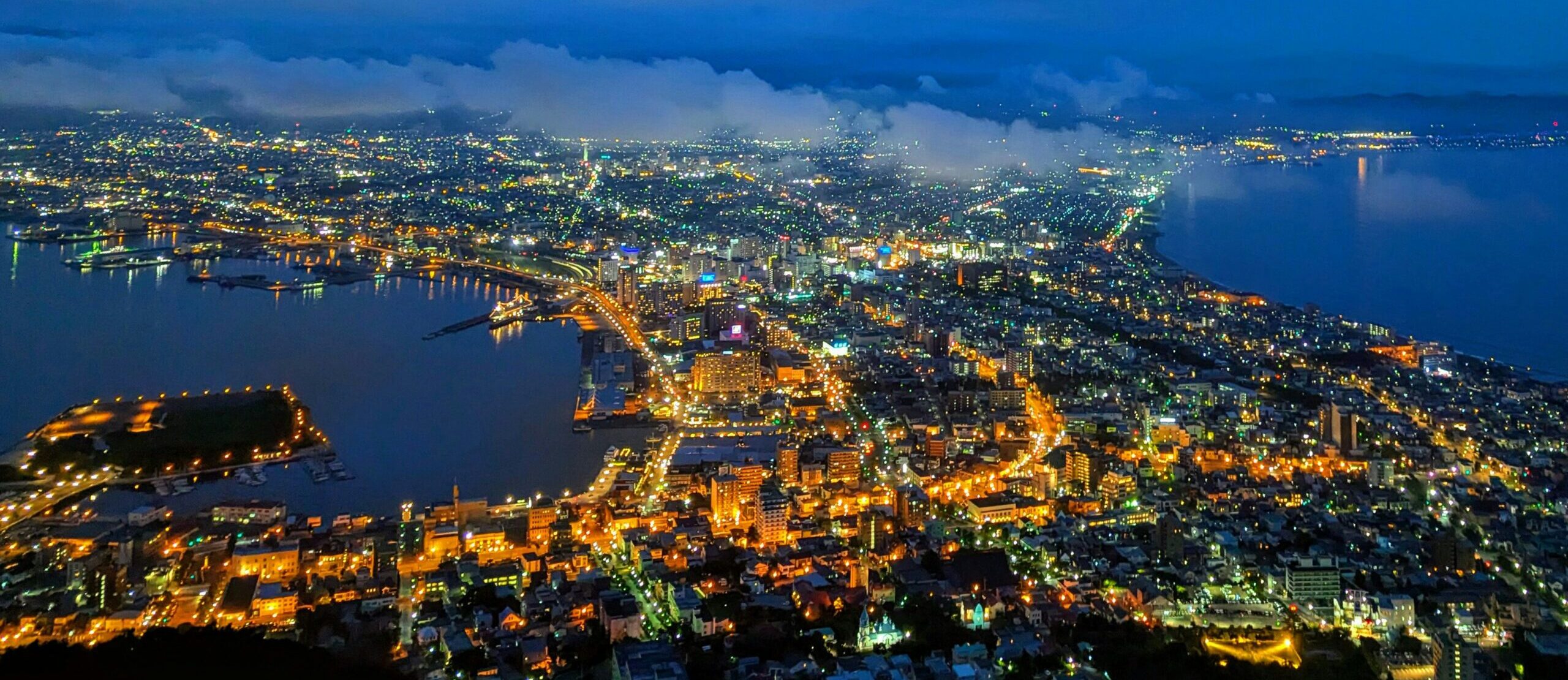
Photo by Daniel Beauchamp on Unsplash
Japan’s largest power generator has secured government-backed price support to build the world’s most ambitious low-carbon ammonia supply chain, anchored at Hekinan and already expanding north to Hokkaido and into industrial sectors.
Under Japan’s ¥3 trillion Contracts for Differences (CfD) program — established by the Hydrogen Society Promotion Act that took effect in October 2024 — JERA has secured certification to procure 492,144 metric tons per year of low-carbon blue ammonia, commencing February 2030.FN1 The ammonia will be sourced from the Blue Point facility in Ascension Parish, Louisiana — a joint venture in which JERA holds a 35% equity stake alongside CF Industries (40%) and Mitsui & Co. (25%), with a total nameplate production capacity of 1.4 million metric tons per year and an estimated construction cost of approximately $4 billion.FN2
The CfD support, administered through JOGMEC and structured as a 15-year price-gap subsidy, bridges the cost differential between blue ammonia and conventional coal — a gap that has been widely cited as the primary commercial barrier to large-scale ammonia co-firing adoption.FN3 Critically, the program leverages both Japan’s domestic CfD budget and the U.S. 45Q tax credit applicable to carbon capture at the Blue Point facility, where more than 95% of production-derived CO₂ is expected to be captured and sequestered — approximately 2.3 million metric tons annually — by 1PointFive’s Pelican Sequestration Hub in Louisiana.FN4
At the Hekinan Thermal Power Station in Aichi Prefecture — JERA’s flagship 4.1 GW coal-fired complex — the infrastructure to receive and store this ammonia is already taking shape. IHI Corporation is constructing four large-scale ammonia storage tanks with a combined capacity of 160,000 tons adjacent to the import hub, part of a full supply chain design stretching from Louisiana to the Mikawa Bay shoreline.FN5 The co-firing technology itself has already been validated: in a landmark three-month trial conducted from April to June 2024 at Hekinan Unit 4 (1 GW), 20% ammonia fuel substitution was achieved with stable operations, and critically, CO₂ emissions were reduced by 20% — precisely in line with the substitution rate, while NOₓ levels remained within targets through combustion temperature control.FN6 Commercial 20% co-firing at Hekinan is now scheduled to commence by fiscal year 2029.
The majority of JERA’s 492,144 tons per year offtake will be directed to Hekinan for power generation co-firing, but a meaningful portion will serve as industrial furnace fuel for Toyota Industries Corp., AGC Inc., NGK Insulators Ltd., and Aisin Fukui Co. Ltd. — signaling a deliberate strategy to build cross-sector demand that strengthens the commercial case for the entire supply chain.FN1
Beyond Hekinan, the CfD program has simultaneously certified a parallel project led by Mitsui & Co., which will supply 280,000 metric tons per year of blue ammonia from the same Blue Point facility beginning January 2031, primarily destined for ammonia co-firing at Hokkaido Electric Power’s Tomato-Atsuma thermal power plant in northern Hokkaido — with additional volumes serving UBE Mitsubishi Cement and Tosoh Corp. as industrial raw materials.FN7 Together, the two Japanese consortia have secured just over half of Blue Point’s entire production capacity, substantially de-risking the project’s commercial viability and signaling to global capital markets that Japan’s ammonia demand is real and contractually backed.FN3
With approximately 65% of the $19.2 billion CfD funding envelope still available following these awards, analysts at Wood Mackenzie and S&P Global anticipate further international supply chain deals — including potential green hydrogen imports from India (led by ACME with an IHI-headed consortium) and additional ammonia projects — as Japan continues to scale its low-carbon hydrogen procurement toward its target of up to 3 million metric tons per year of hydrogen equivalent by 2030, rising to 12 million by 2040, and 20 million by 2050.FN8
JERA itself has articulated an even more ambitious long-term trajectory: from the current pilot at Hekinan, the company plans to scale to 50% ammonia co-firing demonstrations by 2028, pursue 100% ammonia dedicated combustion in ultra-supercritical units by the 2040s, and ultimately handle 7 million tons of ammonia annually by 2035 as it builds toward its net-zero target for domestic and overseas operations by 2050.FN9
The Hekinan Template: From Demonstration to National Decarbonization Architecture
The JERA CfD certification marks a decisive inflection point — not merely for a single power plant, but for the structural viability of ammonia as a decarbonization vector in coal-dependent Asia. What began as a NEDO-subsidized demonstration at Hekinan Unit 4 has now been formalized into a 15-year, government-backed supply chain anchored by the world’s largest blue ammonia production facility. The 20% CO₂ reduction validated during the 2024 trial is the floor, not the ceiling: JERA’s roadmap to 50% co-firing by 2028 and dedicated combustion by the 2040s means that each ton of ammonia delivered will carry a progressively larger decarbonization payload as the technology matures. More significantly, the replication of the Hekinan model at Hokkaido Electric’s Tomato-Atsuma plant — and the deliberate extension of ammonia supply into industrial furnaces across Toyota, AGC, and NGK — demonstrates that Japan is not building a single point of proof but a distributed architecture. With 65% of the CfD budget still uncommitted, the program has the financial depth to pull additional international supply chains into orbit. The open question is no longer whether Japan’s ammonia co-firing strategy can work — Hekinan has answered that — but how fast the model can be exported, and to whom.
Geospatial Distribution of CO₂ Emissions from JERA Thermal Power Plants in Japan
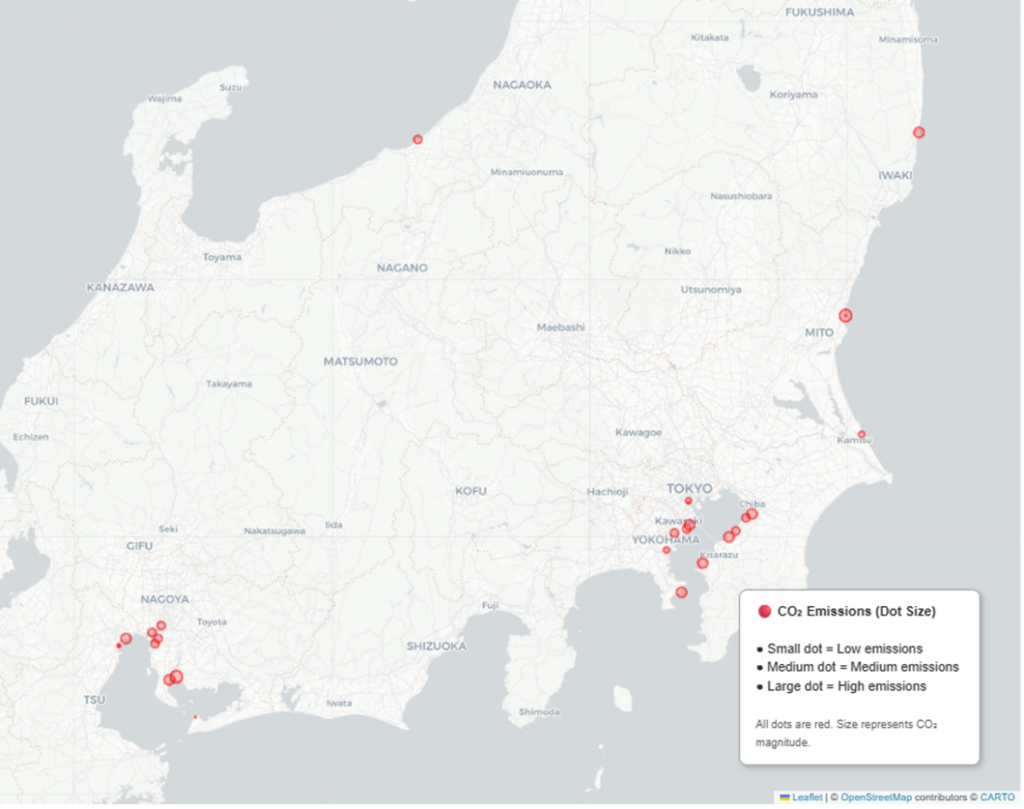
Source: JERA as of April 20th, 2026. Notes: The spatial pattern of JERA’s thermal fleet shows a clear concentration of large‑scale CO₂ emitters along Japan’s Pacific industrial corridor, particularly in the Kanto, Tokai, and Chubu regions. High‑capacity LNG and coal units—such as Futtsu, Sodegaura, Hekinan, and Kawagoe—anchor the emission landscape, reflecting both their scale and their strategic role in baseload and mid‑merit operations. The Kanto region exhibits a dense cluster of LNG-fired stations. Although LNG has lower carbon intensity than coal, the combination of high utilization rates and large unit sizes results in substantial aggregate emissions. This creates a band of mid‑to‑large emission points stretching across Chiba, Kanagawa, and Tokyo’s coastal zone. In contrast, Tohoku and Hokuriku show fewer and smaller thermal assets, consistent with lower regional demand density and a more diversified generation mix. These regions contribute less to JERA’s total emissions footprint, but individual coal units still stand out as regional hotspots. Overall, the geospatial distribution highlights where decarbonization interventions—fuel switching, hydrogen/ammonia co‑firing, efficiency upgrades, or selective early retirement—would deliver the greatest system‑wide impact. The Pacific Belt remains the priority zone for emission reduction due to its concentration of high‑capacity thermal assets.
Japanese Translations
「碧南モデル」から国家的脱炭素アーキテクチャへ
JERAのCfD認定は、単一の発電所の話に留まらず、石炭依存アジアにおけるアンモニアの脱炭素ベクターとしての構造的実現可能性を決定づける転換点だ。NEDOの補助金による碧南4号機の実証として始まったものが、世界最大規模のブルーアンモニア生産設備を軸とした15年間の政府支援サプライチェーンとして正式に組み上げられた。2024年の実証試験で確認された20%のCO₂削減は下限であって上限ではない。JERAが描く2028年50%混焼、2040年代専焼へのロードマップは、技術の成熟とともに1トンあたりのアンモニアが担う脱炭素効果が段階的に大きくなることを意味する。さらに重要なのは、碧南モデルが北海道電力の苫東厚真に複製され、トヨタ・AGC・日本碍子の産業炉へと延伸されたことだ。日本は単一の成功事例を積み上げているのではなく、分散型アーキテクチャを構築している。CfD予算の65%がまだ未消化である以上、プログラムには追加の国際サプライチェーンを引き込む財政的な余力が十分ある。今や問われるべきは、日本のアンモニア混焼戦略が機能するかどうかではない——碧南がそれに答えた。問われているのは、このモデルがどれほど速く、どこへ輸出されるかだ。
JERA火力発電所におけるCO₂排出量の地理的分布
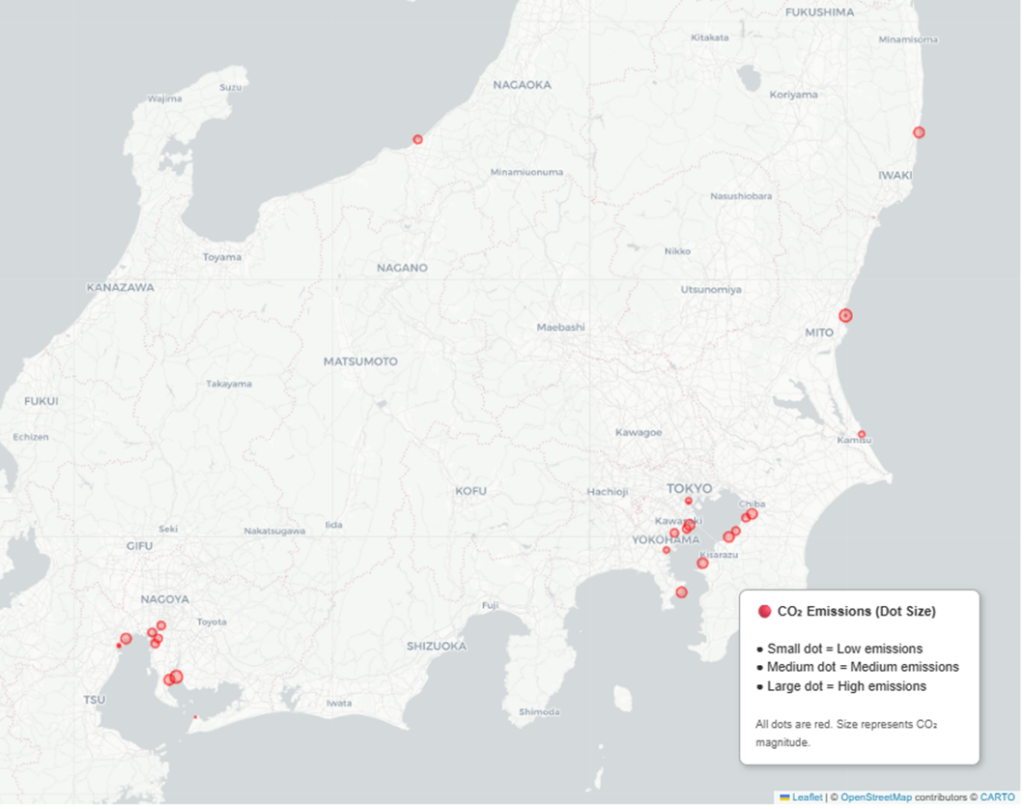
Source: JERA 発電所一覧。JERA の火力発電所は、日本の 太平洋ベルト地帯 に沿って大規模排出源が集中しており、 特に 関東・東海・中部 が排出構造の中心を形成している。 富津・袖ケ浦・碧南・川越 などの大容量 LNG/石炭火力は、設備規模と稼働率の高さから、地域全体の排出量を大きく左右する主要拠点となっている。関東地域 では LNG 火力が密集しており、石炭より炭素強度は低いものの、 大規模ユニット+高稼働率の組み合わせにより、総排出量としては依然大きい。 千葉・神奈川・東京湾岸にかけて、中規模〜大規模の排出点が帯状に連なる構造が見られる。一方、東北・北陸 は火力設備が相対的に少なく、需要密度や電源構成の違いが地理的分布に反映されている。 ただし、個別の石炭火力は地域内で突出した排出源となり、局所的なホットスポットを形成する。総じて、この地理的分布は 脱炭素化の優先領域 を明確に示している。 特に太平洋ベルト地帯は、大容量火力が集中しているため、 燃料転換、水素・アンモニア混焼、効率改善、早期リタイアなどの施策による排出削減効果が最も大きい地域である。
References & Footnotes
FN1 S&P Global Commodity Insights, “Japan certifies JERA-, Mitsui-led ammonia projects under Yen 3 trillion price-gap subsidy,” December 19, 2025. — JERAのCfD認定量492,144トン/年、2030年2月開始、碧南での主用途および産業炉向け顧客の詳細。
FN2 CF Industries Holdings, Inc. / BusinessWire, “CF Industries Announces Joint Venture with JERA Co., Inc., and Mitsui & Co., Ltd., for Production and Offtake of Low-Carbon Ammonia,” April 8, 2025. — Blue Point JV構造(CF 40%、JERA 35%、三井25%)、総生産能力140万トン/年、建設費40億ドル、ATR+CCS技術(Technip Energies / Topsoe)。
FN3 Wood Mackenzie, “Japan hydrogen CfD 2025,” Press Release, January 15, 2026. — JERA・三井両プロジェクト合計約77.2万トン/年(水素換算12万トン)、CfD予算の約35%消化、残余65%、Blue Point生産量の過半確保の商業的意義、15年間のJOGMEC支援。
FN4 CF Industries Holdings, Inc., “CF Industries Announces Joint Venture with JERA Co., Inc., and Mitsui & Co., Ltd.,” April 2025. — CO₂捕捉率95%以上、1PointFive(Occidental子会社)によるPelican Sequestration Hubでの年間約230万トンCO₂地中隔離、45Qタックスクレジット適格性。
FN5 Ammonia Energy Association / METI Hub Development Support Program, “Hekinan, Tomakomai ammonia import hubs secure funding support from METI,” April 7, 2026. — IHIによる碧南輸入ハブ隣接の大型貯蔵タンク4基(合計16万トン)建設、トラック積み込み施設を含む完全サプライチェーン設計。
FN6 Nature / JERA / IHI Corporation, “Ammonia: the future fuel with sustainable potential,” Nature Partner Journals / JERA Discover, 2024. — 碧南4号機(1GW)での2024年4〜6月の20%混焼実証:CO₂20%削減、NOₓ許容値内、IHI製アンモニア石炭バーナーの役割、2029年度商業運転計画。
FN7 Ammonia Energy Association / S&P Global, “Hekinan, Tomakomai ammonia import hubs secure funding support from METI,” April 2026; S&P Global, December 2025. — 三井主導プロジェクト:28万トン/年、2031年1月開始、北海道電力苫東厚真発電所向け混焼が主用途、UBE三菱セメント・東ソーへの産業用途、苫東ハブ開発コンソーシアム(北電・苫小牧埠頭・IHI)の詳細。
FN8 Wood Mackenzie / S&P Global Commodity Insights, January 2026; December 2025. — CfD残余予算65%、次候補案件としてACME(インド)グリーン水素・IHIコンソーシアム、日本の水素等導入目標:2030年300万トン/年、2040年1,200万トン、2050年2,000万トン。
FN9 JERA Co., Inc. / Chemical Market Analytics (OPIS), “Clean Ammonia for Power Generation — Is the Hype Fizzling Out?” January 14, 2026; Ammonia Energy Association JERA profile. — 2028年50%混焼実証計画、2040年代の超々臨界圧機での100%専焼目標、2035年700万トン/年取扱目標、2050年ネットゼロ宣言。